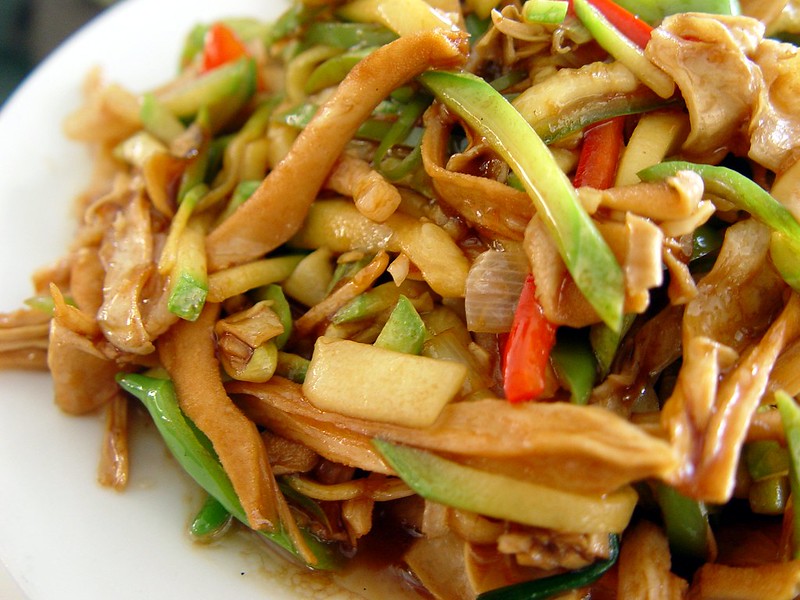
In a world where dining out often straddles the line between sinful indulgence and nutritional prudence, the cuisine of the Far East has long held a reputation for balancing the scales in favor of heart health. Chinese food cork, a culinary tapestry interlaced with the threads of tradition, flavor, and wellbeing, demonstrates how nourishment and delight can inextricably be woven into one experience.
An Ode to Balance in the Bowl
Chinese cuisine, particularly when viewed through the lens of traditional principles, is predicated on balance. This isn’t just about the flavor profile — although the interplay between sweet, sour, bitter, salty, and umami certainly plays a leading role – but also about the holistic nutritional experience. The ingredients, preparation methods, and even the art of plating are designed to achieve harmony within the body.
Take, for instance, the iconic dish of Kung Pao Chicken. It’s not simply a delectable juxtaposition of crunchy peanuts with tender chicken and the lively tang of Sichuan peppercorns. No, at its core, this dish reflects a nuanced duality of texture and taste that’s emblematic of a larger philosophy: the need for variance in our diets to provide a complete nutritional package.
Seeking harmony isn’t a mere abstraction in Chinese culinary tradition; it’s a tenet that leads to lighter, more healthful meals. By privileging steaming, stir-frying, and other low-fat cooking methods over deep-frying, and opting for a colorful array of vegetables and lean meats, Chinese dishes often land on the table with fewer calories and less saturated fat than many Western counterparts. The soups, in particular, are not a side note but a signature symbol of this dedication to balance, offering a nutrient-dense start to a meal that can foster a sense of fullness and satisfaction.
Sizzling Science on the Stove
The question arises, though, as to whether science can tangibly vouch for the heart-healthy advantages that the Chinese diet purports. Fortunately, research offers an enthusiastic nod in agreement.
A study in the British Medical Journal, for example, found that those who ate the most fresh fruit had a 40% reduced risk of mortality from cardiovascular disease compared to those who rarely ate fresh fruit. This is particularly resonant with Chinese dining, where fruit is often enjoyed as a dessert or snack.
More than just the presence of these heart-healthy ingredients, the balance within meals is significant. In a heart health study published in ‘The Journal of the American College of Cardiology’, researchers found that a traditional Chinese diet pattern – rich in fruits, vegetables, whole grains, and seafood, and lower in unhealthier choices – was linked to a 23% reduction in stroke risk compared with a Western pattern.
It’s not merely the presence of certain foods over others; it is a structured way of eating that has served as the backbone of traditional Chinese cuisine and points towards the heart-healthy benefits it provides.
Closing Thoughts: A Salutary Journey
Exploring the heart-healthy aspects of Chinese Food Cork isn’t just about adding it to the list of ‘good for you’ gastronomic adventures. It’s an invitation to appreciate how cultural practices around food can teach us lifelong lessons in healthful living.
Maybe it’s giving more attention to the harmony of flavor and nutrition in our daily meals or perhaps adopting the Chinese philosophy of eating — little meat, lots of vegetables, low-fat cooking methods, and an emphasis on balance.
Whether it’s occasionally ordering from your local Chinese Food Cork or taking inspiration to make these changes in your home kitchen, the heart-healthy whispers of Chinese cuisine call to audiences far beyond the edges of the wok. In cherishing these culinary traditions, we discover that savoring a meal can be about much more than just flavor — it can be a celebration of life and the health that sustains it.